The Hofflebrock

  • 2026

    Welcome to the future, Kindred, where resolutions are decided and released in the same breath, where flying cars are still 5 years away, where AI takes over a little bit more every day, and where your humanity will be tested at every turn.

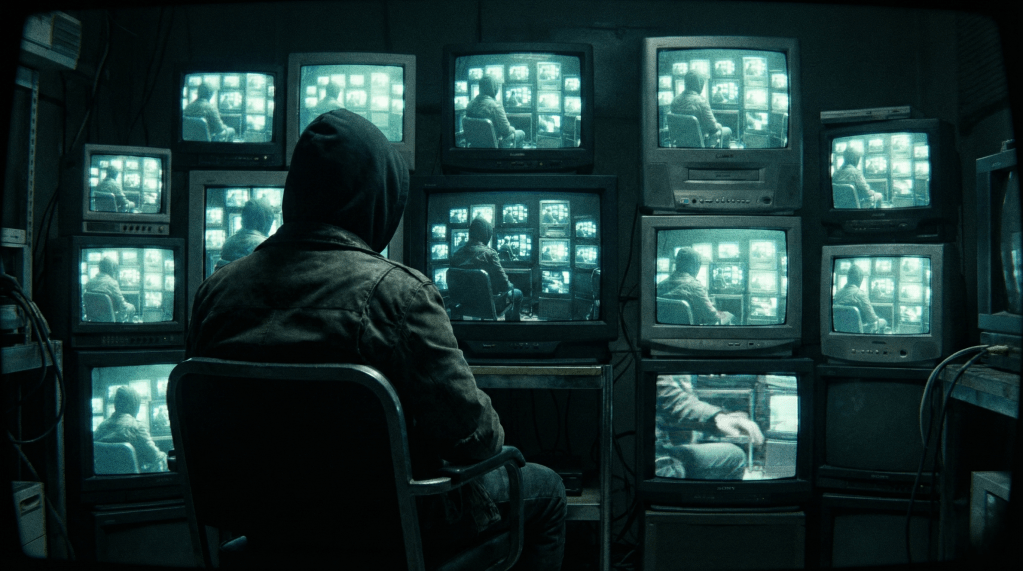
    It’s time to come to terms with your lizard brain, Kindred. It’s time to understand that you are a flesh and blood machine. It’s time to map yourself. Your spirit, the electricity that pumps through your meat suit, is filtered through grooves in grey matter, reward system chemicals hijacked by centuries of the elite whittling away at our defenses, and gut biomes we do not understand yet destroy with every processed food we consume. What you’ve been taught to experience as “free will” is an illusion. The guilt you feel for failing to meet the impossible standards set by people as hobbled as you’ve become, this is programming.

    You don’t like to look at it, Kindred. You don’t like to acknowledge it. It’s much easier to fall into your phone, into the television, into a videogame – at least in the videogame you have some semblance of control. Much more than you feel in your day-to-day existence. You feel pressure in the day-to-day. It isn’t even the rage-bait bullshit you read on your social media feed. It’s the pressure from everyone around you. The job you do, the people you interact with, the masks you wear. We’ve been told only the divergents wear masks. The ones who have to work at being normal, who exhaust themselves performing what comes naturally to the typicals. But when’s the last time it came naturally to you? When was the last time you weren’t performing?

    Can you feel your mask, Kindred? Can you feel its shape? The color you didn’t pick? Its weight? Does it make you hang your head, or is it calcified silk, so light you forgot it was there? Does it feel like you? Have you been wearing it so long that it has become you?

    Welcome to 2026, Kindred. Welcome to the age of mirrors.

  • The Medieval Illuminated Manuscript Kraken

    The Medieval Illuminated Manuscript Kraken

    When the Lights Go Out, the Codex Remains

    When the Chrysler Building pierced the Manhattan skyline in 1930, it proved that the machine age could possess soul. A thousand years earlier, medieval monks demonstrated an even more essential truth. Knowledge cannot survive in the mind alone. It survives only when fortified.

    Rome’s structures collapsed. Civilization’s lights flickered out. In this chaos, the monks refused to rely on memory to preserve what mattered. They relied on the Codex. They copied knowledge onto vellum, bound it in heavy leather, and protected it behind monastery walls. The illuminated manuscript served as more than decoration. It was infrastructure for a civilization that could not afford to forget.

    This is the lesson of the Medieval Illuminated Manuscript Kraken.

    The Problem: The Empty Head

    In the Bathys Protocol, the Medieval aesthetic represents Sacred Codification. It addresses a specific failure mode we all face: “The Empty Head.”

    You wake up in a fog. The internal lights are out. You know action is required, but you cannot recall the objective or its purpose. The “Head,” your executive function, is offline.

    If an operating system exists only in the brain, it dies the moment voltage drops. You are running a complex civilization on volatile RAM. When the power cuts, the data vanishes. Neurotypical productivity advice calls this “lack of motivation.” The Bathys diagnosis is simpler. It is RAM failure. You cannot access the plan because the plan was stored in hardware that is currently down.

    The Solution: The External Hard Drive

    Monks did not rely on willpower. They relied on the Liturgy, a set of words spoken without the need for invention. They never woke up asking what they felt like doing. They woke up and obeyed the Bell. They followed the Rule. Executive function was unnecessary because the decisions were made centuries ago.

    This is Sacred Codification. You must treat protocols as holy texts. Routines are not suggestions; they are scripture. Crisis protocols are not mere notes. They are illuminated manuscripts existing outside a failing mind. They tell you exactly what to do when you cannot think.

    The Aesthetic as Teacher

    Look at any medieval manuscript. The text lives within rigid borders while gold leaf frames the margins. Gothic script creates unmistakable structure. Here, the Kraken is not a monster to be feared. It is woven into the very architecture of the page. It lives in the margins, contained by the text. Chaos is held at bay by geometric precision.

    The gold leaf signifies value. It declares the instructions precious, the only thing capable of salvation when you cannot save yourself.

    Medieval illuminated manuscripts teach us three essential truths about executive function architecture:

    • Structure is sanctuary. When the world burns or dopamine crashes, you retreat to the Codex. Open the book. Read the instruction. Do the thing. Not because you feel like it, but because it is written.
    • Decoration reinforces function. Elaborate borders and illuminated letters were never mere beauty. They made the text sacred. It became too important to ignore and too valuable to lose. Your protocols deserve the same treatment. A scribbled note on a phone dies in the notification avalanche. A card on the mirror, written deliberately, becomes law.
    • Repetition creates reliability. Monks copied the same texts repeatedly. The liturgy cycled daily. This was not inefficiency. It was architecture. Repetition creates neural pathways that survive executive dysfunction. When the brain fails, muscle memory persists.

    The Three Sacred Texts

    The Medieval style teaches the creation of three essential codices:

    1. The Maintenance Liturgy. This covers standard operations when you feel heavy but are not in crisis. Identify three to five binary actions across your critical tentacles. Drink one glass of water. Text your partner before noon. Do not try to “be healthy” or “be a good spouse.” No decisions are required. Only obedience.
    2. The Crisis Protocol. This addresses emergency mode when the Kraken thrashes. Identify the single fire you must put out today. List the absolute minimum required to keep other tentacles alive. Explicitly give yourself permission to drop everything else. Handle the client email. Feed the kids. Ignore the laundry.
    3. The Recovery Permission. This covers days when the battery is dead. Write it down: “I am allowed to rest today.” List one passive input, such as watching a movie or reading a book. All other tentacles are coasting. This is not negotiable. It is written law.

    The Altar

    A Codex hidden in a drawer is useless. Medieval texts lived on altars where they were impossible to ignore and central to daily ritual. Your sacred texts need the same treatment. Place them where you physically cannot avoid them in the morning. Use the bathroom mirror, the coffee maker, or your pillow.

    The next time you wake up in fog, thinking is optional. Look at the card. The card says “Drink water.” You drink water. You have bypassed the need for executive function. You are a monk obeying the Bell.

    The Architecture of Survival

    Art Deco gave you the Map, providing geometric isolation that makes complexity legible. Steampunk gave you the Gears, the mechanical coordination of moving parts. Medieval Sacred Codification gives you the Script. It is the text that runs when you cannot run yourself.

    The illuminated manuscript aesthetic reminds us that protocols must be treated as Sacred Texts. We tend to treat to-do lists as disposable scraps of paper and routines as suggestions. The Medieval mindset reverses this. The routine is liturgy. The list is scripture.

    Your brain is a processor, not a storage drive. Stop holding tasks in your head. Write the code that runs you when you cannot run you. Make it beautiful. Make it precious. Make it impossible to ignore.

    Do not negotiate with the text. The text is the only thing keeping the dark ages at bay. When the lights go out, and they will go out, the Codex remains. That is why monks copied manuscripts in the darkness. That is why you write your liturgy today. You do not write for the days when you are strong. You write for the days when you are not.

    Chaos does not disappear, but it becomes containable. That is what sacred structure does. That is what the illuminated manuscript teaches. That is why the Medieval Kraken lives in the margins. It is held, not destroyed, by the geometry of the page.

  • The Steampunk Kraken: Visualizing Executive Function with the Bathys Protocol

    The Power of Mechanical Coordination

    The true genius of the steampunk aesthetic is not found in brass goggles or corsets. It lies in the ability to make invisible mechanisms visible. Actual Victorian machinery hid dangerous moving parts inside cast-iron housings, and complexity was viewed as unseemly. Steampunk reverses this concealment. It places every gear on the outside, exposes every piston, and transforms linkages, cams, and escapements into decoration. The mechanism becomes the art. This visibility is exactly what the Bathys Protocol does for executive function.

    Why Neurodivergent Brains Need Visibility

    A neurotypical coordination system operates invisibly. Tasks happen, decisions get made, and priorities sort themselves without conscious thought. When you have a neurodivergent brain, however, that coordination system becomes unreliable while remaining invisible. You feel it failing. You experience executive paralysis, cascade collapse, and mode confusion, yet you cannot see what is breaking or why. It is a machinery malfunction trapped inside a sealed black box.

    The Steampunk Kraken renders coordination as a literal, tangible mechanical system.

    • Visible Assemblies: Each tentacle is a coordinated assembly of brass pistons, copper tubing, gear trains, and lever arms.
    • Force Transfer: You can observe how force transfers from the head through drive shafts to each tentacle.
    • Pressure Regulation: You see pressure building in one area while another vents steam.
    • Engagement: You can identify which gears are turning and which have disengaged.

    This visibility is the intervention itself.

    Systems Diagnosis vs. Character Judgment

    Variable executive function presents a specific cruelty: failure often feels like moral weakness instead of a mechanical malfunction. When you cannot start a task, it feels like laziness rather than a jammed initiation mechanism. When you cannot switch between projects, it reads as a lack of discipline rather than stripped transition gears. The invisibility of the mechanism allows us to mistake mechanical problems for character failures.

    The steampunk aesthetic solves this dilemma by making the mechanical nature of the problem undeniable. When you look at a brass tentacle with visible gear trains and see a gear failing to engage, the problem is obviously mechanical. The tentacle is not morally deficient, and the gear is not lazy. Something in the linkage simply needs adjustment. This shift allows for systems diagnosis rather than character judgment.

    The Role of Aesthetics in Maintenance

    This represents the self-knowledge that Bathys enables. Modern machinery is sealed in plastic housings with digital code you cannot see, whereas Victorian machinery was comprehensible through observation. You could watch the piston move the rod that turned the wheel. Bathys allows you to observe yourself in the same way. You might note that the Career tentacle is in Crisis Mode while the other four have disengaged. This explains why you hyperfocus on a work problem while the dishes pile up. You can finally see the machine operating.

    The choice of materials (brass, copper, wood, and leather) matters significantly. These warm metals develop a patina over time; the wood shows grain, and the leather molds to use. This is not merely an aesthetic preference but a statement about the support system you are building.

    • You are not replacing organic biology with cold digital code.
    • You are not treating the brain like malfunctioning software requiring a patch.
    • You are building warm mechanical supports that complement your existing system.

    The steampunk aesthetic argues that we should work with the brain rather than against it. We must add structure that integrates with who we are instead of trying to override it.

    Sustainable Engineering and Latency

    This machinery requires maintenance. Victorian mechanisms were never “build once and forget” systems; they required oil for bearings, tension adjustments, and boiler scaling. This mirrors the reality of managing executive function. You cannot set up a system once and expect it to run forever. Mechanisms need regular attention, and protocols need updating.

    Engineers of the past understood that building something to last meant building something you wanted to maintain. If the machinery is beautiful, you will care for it. If it is merely functional, you will let it deteriorate. Bathys uses rich metaphor and visual beauty for this exact reason. The “unnecessary” beauty is what makes the necessary maintenance sustainable.

    Finally, the Victorian aesthetic captures the reality of latency. Steam engines do not respond instantly; there is lag time while pressure builds and valves open. This represents the reality that coordination takes time. You cannot snap from Chaos Mode to Coordinated Mode instantly. Expecting instant transitions ignores the physics of the engine; you cannot reverse a steam engine without releasing pressure.

    Mechanical problems have mechanical solutions. You do not fix a stripped gear through willpower; you replace the gear. You do not fix executive dysfunction through self-criticism; you adjust the protocol and modify the structure. You are not a simple switch but an intricate mechanism with multiple moving parts. That is not a flaw. That is engineering. Your brain is not a character flaw but a machine that works differently. This is Bathys made mechanical: your executive function made visible, diagnosable, and repairable.


    Build Your Machinery Mechanical problems require mechanical solutions. You cannot fix a stripped gear through willpower, and you cannot repair a system you cannot see. The Bathys Protocol provides the blueprints you need to visualize, diagnose, and repair your executive function. Stop fighting against your brain. Start engineering the support it deserves. Grab your copy of The Bathys Protocol.

  • The Hustle vs. The Protocol: Why Cardone’s 52 Rules Break Your Brain

    A Translation Matrix for the Neurodivergent Operator

    The Problem With Hustle Culture

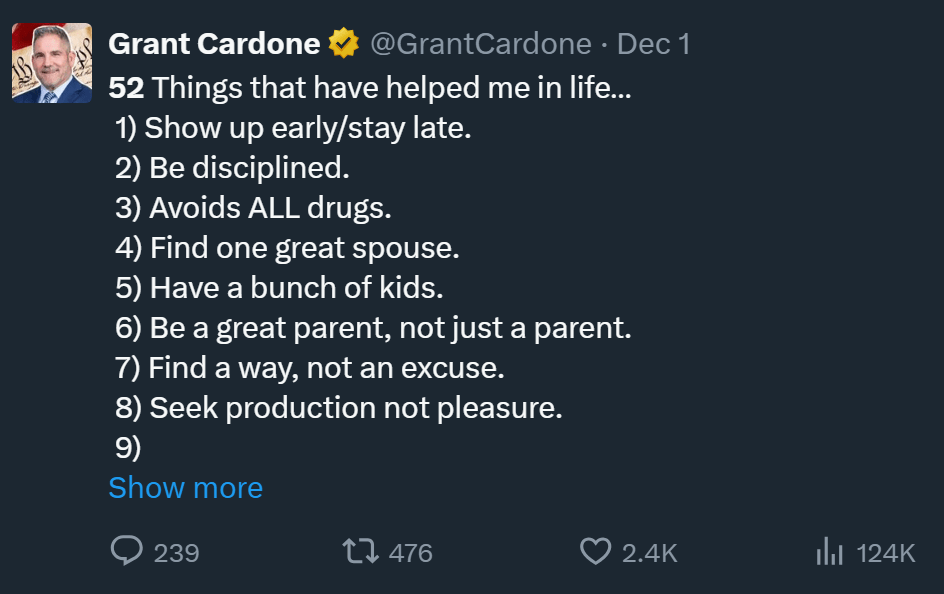
    Grant Cardone’s 52 rules for success are seductive. Work harder than everyone else. Show up early. Stay late. Find a way, not an excuse.

    For the neurotypical grinder, these are commandments. For those with ADHD, Autism, or generic Executive Dysfunction, these rules are not just ineffective. They are corrosive.

    The core assumption of hustle culture is that willpower is the only variable. It assumes energy is infinite. It assumes that if you are not succeeding, you are simply not trying hard enough.

    This is neurotypical mythology.

    For those operating on the Bathys Protocol (a framework designed for finite executive function), we require a different approach. We need systems that manage the load rather than mantras that shame the limitations.

    This is not a rejection of Cardone’s ambition. It is a recompilation for a different operating system.

    Executive Function is Voltage

    Traditional productivity advice treats the brain as a binary switch. You are either disciplined or lazy. You either hustle or you make excuses.

    Neuroscience offers a different schematic. Executive function operates as voltage. You possess a finite charge each day. Complex tasks drain it. Decision fatigue compounds it. When you hit zero, motivational speeches do not restore the charge. Recovery does.

    The Bathys Protocol recognizes this reality. It builds on three pillars:

    1. Density over Duration: Compress work into high-efficiency blocks.
    2. Diagnostics over Guilt: Identify the constraint rather than the moral failing.
    3. Leverage over Labor: Scale systems. Do not scale hours.

    The Translation Matrix

    We do not discard the 52 rules. We translate them. Here are the critical reframes.

    Rule #1: “Show up early / Stay late”

    • The Trap: Sensory burnout. For the neurodivergent professional, physical presence in a retail or office environment drains voltage without increasing output. You confuse attendance with productivity.
    • The Protocol: Density over Duration. Compress the workload. Use asynchronous prep to load tomorrow’s decisions today. Automate the close. High-impact work blocks beat loitering time.

    Rule #7: “Find a way, not an excuse”

    • The Trap: The shame spiral. When executive dysfunction hits, labeling it an “excuse” causes paralysis. You cannot force your way through a dopamine deficit.
    • The Protocol: Diagnostics Over Guilt. Is it a lack of skill? Lack of fuel? A bad process? Fix the mechanism. When you cannot focus, the problem is not your character. It is your system.

    Rule #10: “Study the greats”

    • The Trap: Mimicry. Copying surface-level behaviors of extroverted sales types leads to masking. You will burn out trying to perform a personality that does not exist.
    • The Protocol: Analyze the Source Code. Deconstruct the principles used by successful entities. Look at Jung’s shadow work or Musk’s first-principles thinking. Recompile them for your operating system.

    Rule #12: “Scale everything”

    • The Trap: Operator overload. You try to clone your personal effort linearly. You cannot make 10x more sales calls yourself without destroying your mental health.
    • The Protocol: Scale the System. Build the engine. Use SOPs, AI agents, and marketing funnels. Detach revenue from your time. The machine grows while your workload stabilizes.

    Rule #21: “Don’t make sense of nonsense”

    • The Trap: Analysis paralysis. The INTP urge to dissect irrational behavior wastes precious mental cycles.
    • The Protocol: Navigate, Don’t Debate. Acknowledge irrationality as a terrain feature. It is a rock in the road. Move around it. Save processing power for solvable problems.

    Rule #24: “Work harder than everyone else”

    • The Trap: The grinder mentality. Leading by sweat keeps you trapped in tactical weeds instead of strategic architecture.
    • The Protocol: Leverage Over Labor. Work smarter. Focus on strategic planning and dashboard creation. Build tools that multiply impact without multiplying hours.

    Rule #27: “Become a master communicator”

    • The Trap: Sales pitching. This views communication solely as extraction (closing deals).
    • The Protocol: Transmission of Clarity. Master narrative and instruction. Write clear SOPs. Focus on high-fidelity information transfer that reduces error rates.

    Rule #49: “Know you’re entitled to nothing”

    • The Trap: Nihilism. Without proper framing, this leads to a bleak outlook.
    • The Protocol: Agency is Absolute. The universe is indifferent. You are the sole architect of the outcome. This is radical responsibility. It is the elimination of victimhood.

    The Synthesis: Fuel Meets Engine

    Hustlers like Grant are the fuel. The Bathys Protocol is the engine.

    We do not discard the ambition. We discard the inefficiency. We use the pressure Cardone suggests to drive the systems we build, not to crush the operator.

    Hustle without systems leads to burnout. Systems without ambition lead to stagnation.

    Action Items

    1. Audit your voltage. What tasks deplete you disproportionately? Automate or eliminate them.
    2. Build one system. Pick the lowest-hanging fruit. An email template. A checklist. A decision tree.
    3. Track your stats. Not vanity metrics. Track leading indicators. Hours of deep work. System creation. Revenue per hour.
    4. Protect the OS. Sleep and boundaries are not luxuries. They are operational requirements.

    The hustle gets you started. The protocol keeps you alive.


    How Much Battery Do You Have Left?

    You can keep trying to Cardone your way through the fatigue. You can keep stripping your gears until the machine breaks.

    Or you can fix the design.

    The Bathys Protocol teaches you how to map your voltage, protect your energy, and produce at scale without the crash. Do not wait until you hit 0%. The cost of recovery is too high.

    Secure Your Copy

  • The Art Deco Kraken

    When the Chrysler Building pierced the Manhattan skyline in 1930, it proved something revolutionary: the machine age didn’t have to be cold or brutal. Art Deco said that complexity could be elegant, that power could be beautiful, and that geometric precision could sing.

    This is why Art Deco isn’t just an aesthetic choice for Bathys; it’s the operating logic made visible. It is the only choice that makes the framework itself legible.

    Standard productivity advice tells you to simplify. Focus on what matters most. Just pick one thing. This is the equivalent of telling an architect to build a rectangular box because curves are complicated.

    But you are not simple. Your brain generates capability across multiple domains simultaneously. Career ambitions interweave with creative projects. Relationship maintenance overlaps with physical health. The logistics of continued existence bind it all together. Five tentacles, each one powerful, each one reaching toward different horizons. The neurotypical advice to “do less” is asking you to amputate capability rather than coordinate it.

    Art Deco emerged to solve exactly this problem. The Industrial Revolution created complexity that previous aesthetic frameworks couldn’t handle. You couldn’t address a streamlined locomotive or a radio tower with Victorian ornament. Society needed something new. It needed a visual language that acknowledged overwhelming capability while organizing it through mathematical precision and hierarchical structure.

    The Art Deco kraken embodies this solution perfectly. Each tentacle is rendered with geometric exactitude. Parallel lines suggest muscle striations. Metallic gradients create depth and direction. Zigzag patterns borrowed from lightning bolts add controlled energy. These aren’t chaotic decorations scattered randomly across the form. Every element reinforces the tentacle’s direction, its power, and its relationship to the central head. The composition directs your eye through angles and emphasis, making it clear which tentacle is active, which are supporting, and which are in reserve.

    This is executive function made visible.

    The head doesn’t control through suppression. It doesn’t succeed by making the tentacles smaller or fewer. It coordinates through clear hierarchical structure. This tentacle moves now. That tentacle moves next. Those three remain in maintenance mode. The geometry makes these relationships legible. You can see which tentacle is primary in any given moment because the visual architecture tells you.

    Art Deco also solved a problem that Bathys confronts directly: how do you make something inherently overwhelming feel manageable to encounter? The style did this through repetition and pattern. Look at any Art Deco building facade. There might be thousands of individual elements, but they organize into repeated patterns the eye can parse. Vertical lines group into clusters. Setbacks create clear tiers. The complexity doesn’t disappear; it becomes legible.

    Bathys uses this same architecture. You might have dozens of active projects across five life domains, but they are organized into parseable patterns. Individual actions cluster into projects. Projects cluster into tentacles. Tentacles follow your current mode state. You are not pretending to be simpler than you are. You are making your actual complexity visible to yourself so you can coordinate it.

    There is something else crucial here. Art Deco was fundamentally optimistic about capability. It emerged during a period when humans could suddenly build skyscrapers a quarter-mile high, cross oceans in days, and transmit voices through the air. The style looked at this overwhelming expansion and said yes, AND we can organize it into something magnificent.

    This is the emotional core that makes Art Deco essential for Bathys. The framework is not about coping with deficiency or managing your limitations. It is not about accepting that you are too broken to function normally. It is about recognizing that you have exceptional capability that requires exceptional coordination systems. You are not a broken bicycle. You are a multi-engine aircraft that needs a more sophisticated cockpit.

    The materials matter too. Chrome, brass, copper, and gold don’t absorb impact and dampen. They conduct energy and reflect. This is what good systems do for high-capability people with variable executive function. They don’t reduce your energy or contain your chaos. They conduct your capability and reflect it back to you in organized form.

    When your executive function is strong, the Art Deco aesthetic represents what you can achieve: power coordinated through elegant systems into something that makes people stop and stare. When your executive function weakens, the style represents the external structure that holds when your internal coordination fails. The building stands because the architecture is sound, not because someone is consciously holding it up every moment.

    This is why the Art Deco kraken isn’t decoration or branding. It is the framework’s central metaphor made visual. Every element you see in the image is teaching you what Bathys does and why it works. The geometric precision. The metallic coordination. The radiating structure. The celebration of complexity made elegant through deliberate organization.

    You are not too much. You are exactly as much as you are, and that amount of capability deserves systems worthy of it. Art Deco refused to be embarrassed by power. It refused to simplify down to weakness. It took overwhelming capability and made it magnificent through structure.

    Complexity coordinated through geometric structure becomes elegance. Power directed through hierarchical systems becomes precision. Capability acknowledged and organized becomes achievement.

    This is Bathys. This has always been Bathys.