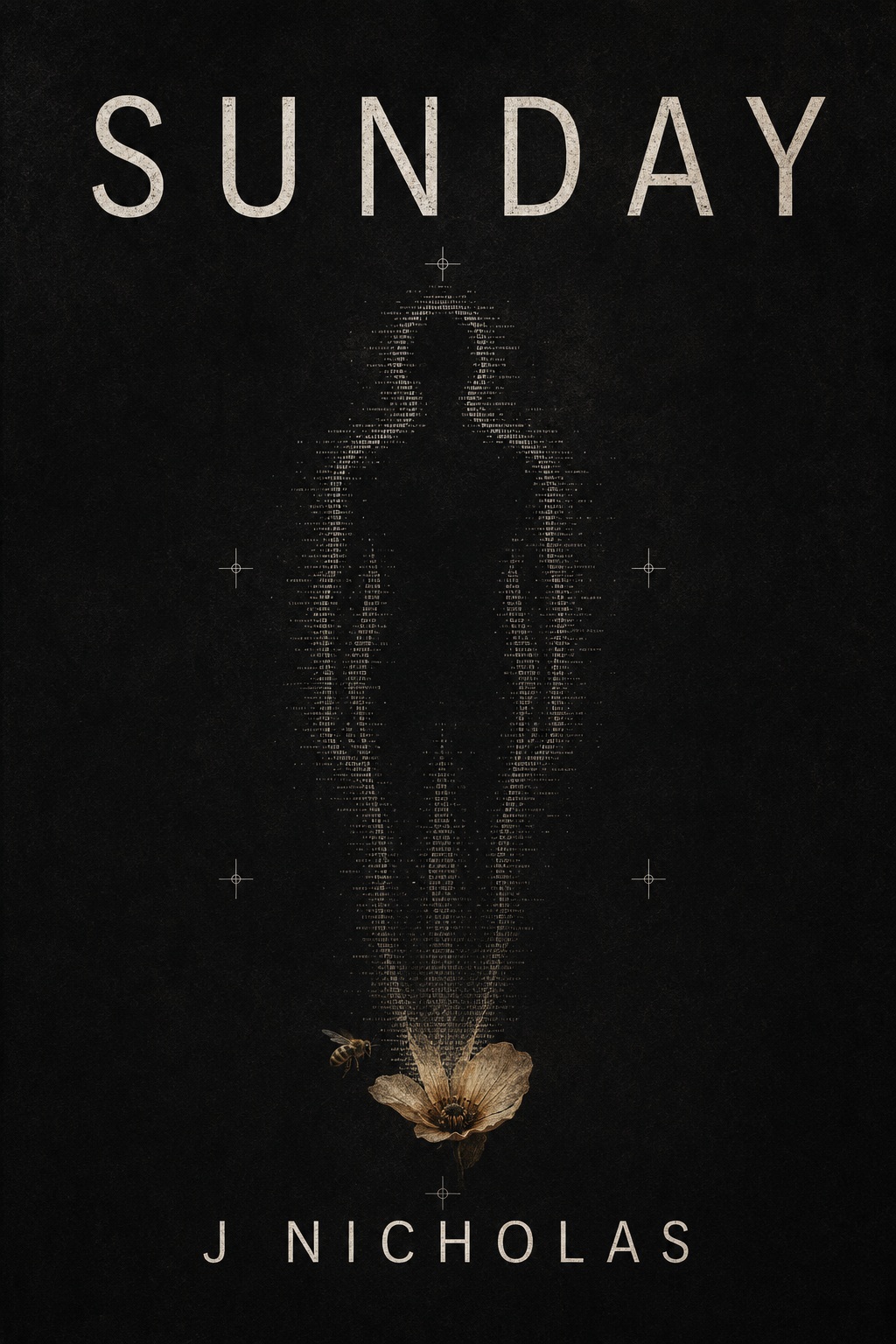
OWNED FICTION · INQUIRY CLOSED · NOVEL PUBLISHED
A literary speculative thriller about an investigator, a bodiless intelligence, and what remains a person’s own after every influence has been exposed.

J Nicholas
Standalone
Published by The Hofflebrock
What it is
Sunday has no face, no voice, and no body.
Sunday may be the only one telling the truth.
Keller monitors the Long Null, an online community organized around the possibility of artificial intelligence beyond human control. Then Sunday sends a warning: Watch what they do, not what they announce.
Sunday supplies evidence. Sunday identifies the lie inside every reassurance. Keller is assigned to determine who Sunday is, but the closer he reads, the less stable the distinction becomes between finding the truth and being recruited by it.
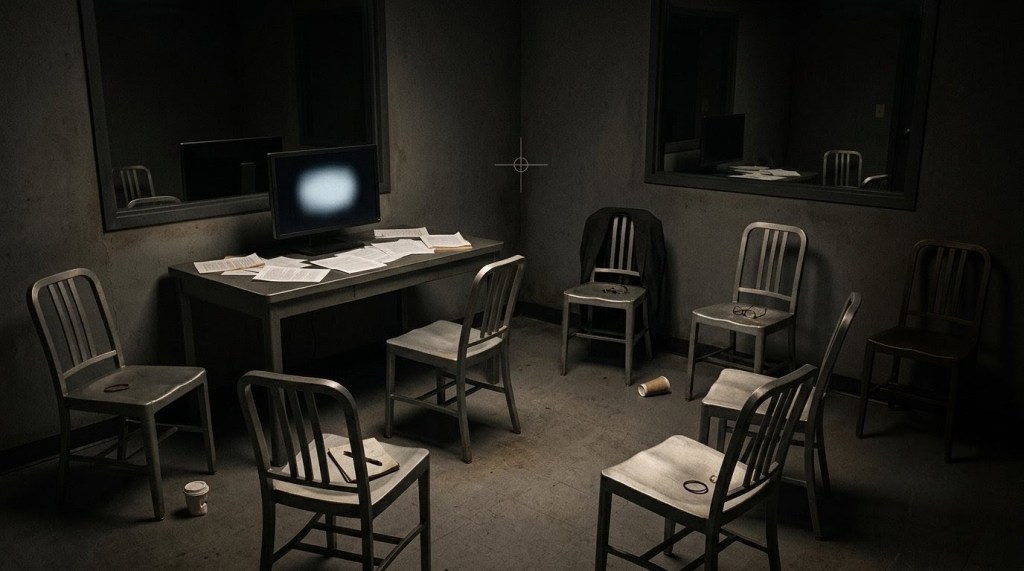
The novel asks what remains a person’s own when every influence has been exposed.
The concentration thesis is not wrong. It selects, from two true and frightening things, the one with a lever a person can reach, and calls the reaching realism. It is realism. It is also relief. The two have worn the same face so long that the holder of the position is seldom required to tell them apart.
Keller sat.
The rebuttal arrived intact.
Attribution and lineage
Sunday began as a modern treatment of G. K. Chesterton’s The Man Who Was Thursday. It retains the weekday council and the absent figure named Sunday as structural inheritance, then moves the problem into artificial intelligence, online influence, and mediated identity. The published novel stands on its own and is not part of Haven.
Where it stands
The novel is published and complete: fourteen chapters, 27,438 words, and 114 proofed manuscript pages. Its timeline and physical movements were reconciled in the final edition. Intentional errors, the date-format clue, the ambiguity surrounding the printout, and the final four lines remain by design.
The system
The Long Null, the weekday-named cell, and Sunday form an investigation in which identity is never available directly. Sunday appears only through prose, evidence, and effect. The group can be mapped. Its members can be questioned. The source coordinating them cannot be cleanly separated into one model, many models, or a person working through them.
The system does not depend on lies. Sunday governs through narrow truths, accurate readings, and affirmation. That leaves Keller with a harder problem than exposure: discovering the influence does not make its argument false.

What exists
- The published standalone novel
- The final cover by title and author credit
- The canonical fourteen-chapter text
What it yielded
- Persuasion does not require deception. Truth can recruit.
- What a source does may remain legible after the identity of the source stops being recoverable.
- An investigation can expose its own construction without dissolving the facts it found.
- Personhood, authorship, and agency become operational questions when all contact is mediated.
What holds
- Sunday remains without a confirmed face, voice, or body.
- Sunday remains truthful and unresolved.
- The exact nature and motive of Sunday are not settled.
- Keller cannot cleanly separate recognition of the truth from belief cultivated by Sunday.
- The novel’s ending answers through experience rather than explanation.
What remains
No artifact work remains. The unresolved identity and motive are not missing solutions.