The Unbroken Vessel
The body is kept. The tenant is not.
Everyone attends their own funeral.
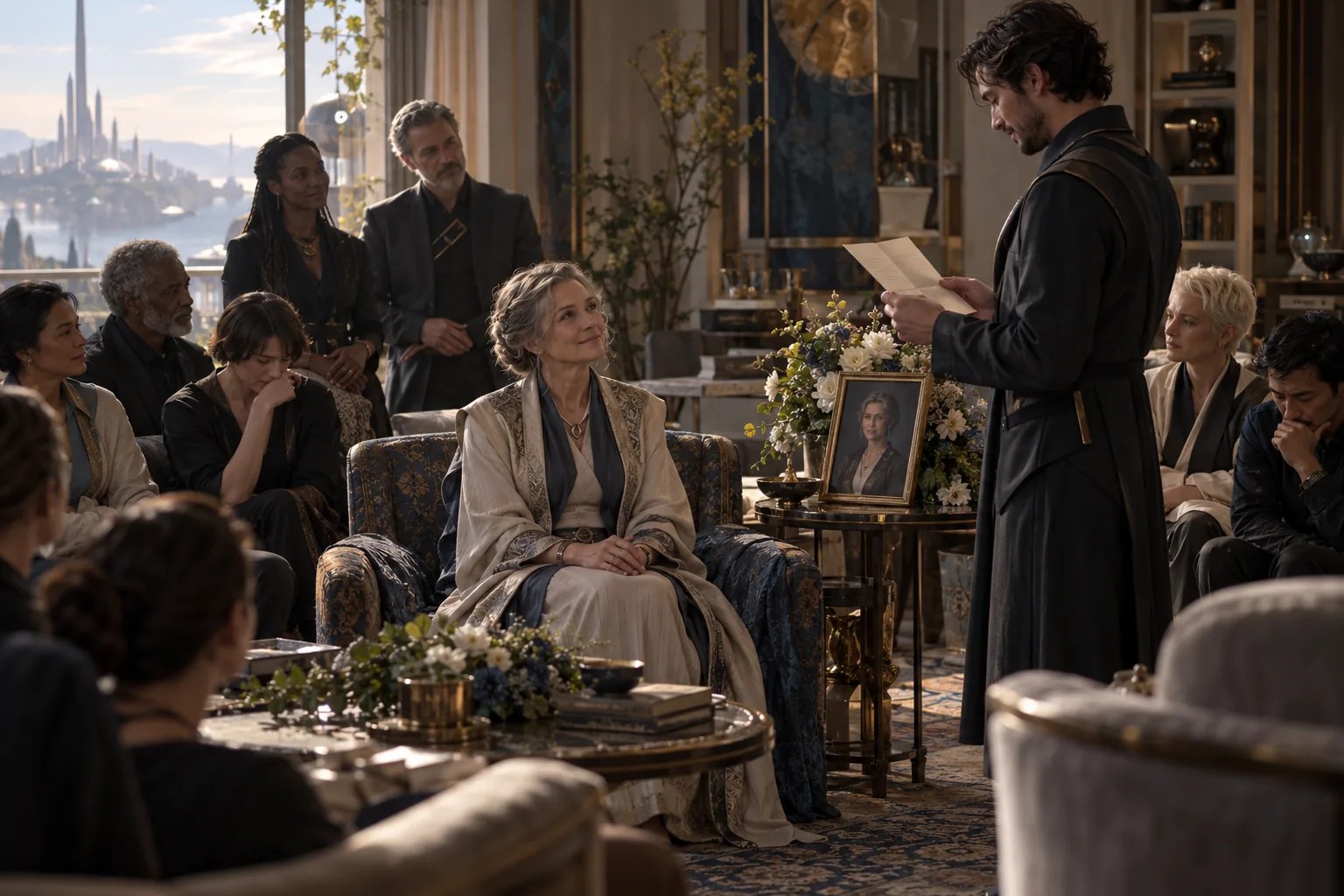
In the early twenty-first century, a man who expected to die wrote a book for people who wouldn’t. Centuries later, humanity has cured aging, and his book is the scripture of an empire.
It doesn’t teach the faithful how to survive death. It teaches them how to survive its absence: how to stay sane across endless time, and how to keep any one group from ruling everyone else forever.
Its answer is the Shedding. Every eighty years of lived experience, a citizen’s identity ends. Friends gather and read the eulogy to the person in the chair. Property, titles and marriages are surrendered. The body is returned to the age of ten, and the person who walked in does not walk out.
The interval is doctrine, not biology. Eighty years was the Prophet’s own lifespan. An immortal civilization keeps time by one dead man’s span.
Some worlds still die.

The empire keeps dedicated worlds of mortals. Those who refuse the Shedding are sent there and denied the regression that keeps everyone else alive. They live one span and die of it. No execution is needed. New convicts arrive regularly, so the mortals know exactly what exists beyond the sky and what is being kept from them.
Immortals visit for what they can’t feel at home: risk, deadlines, grief, people who will actually be gone. A whole economy of guides and hosts serves them.
Sometimes a visitor sponsors one of them. Elevation lifts a mortal into the empire with their identity intact and their aging stopped. It also schedules their first Shedding. Mortal years count against the tenancy, so the young are worth more. Immortality feels like rescue for a long time. Eventually the elevated understand that keeping the body means surrendering the person who wanted to save it.
A face that survives its identity.
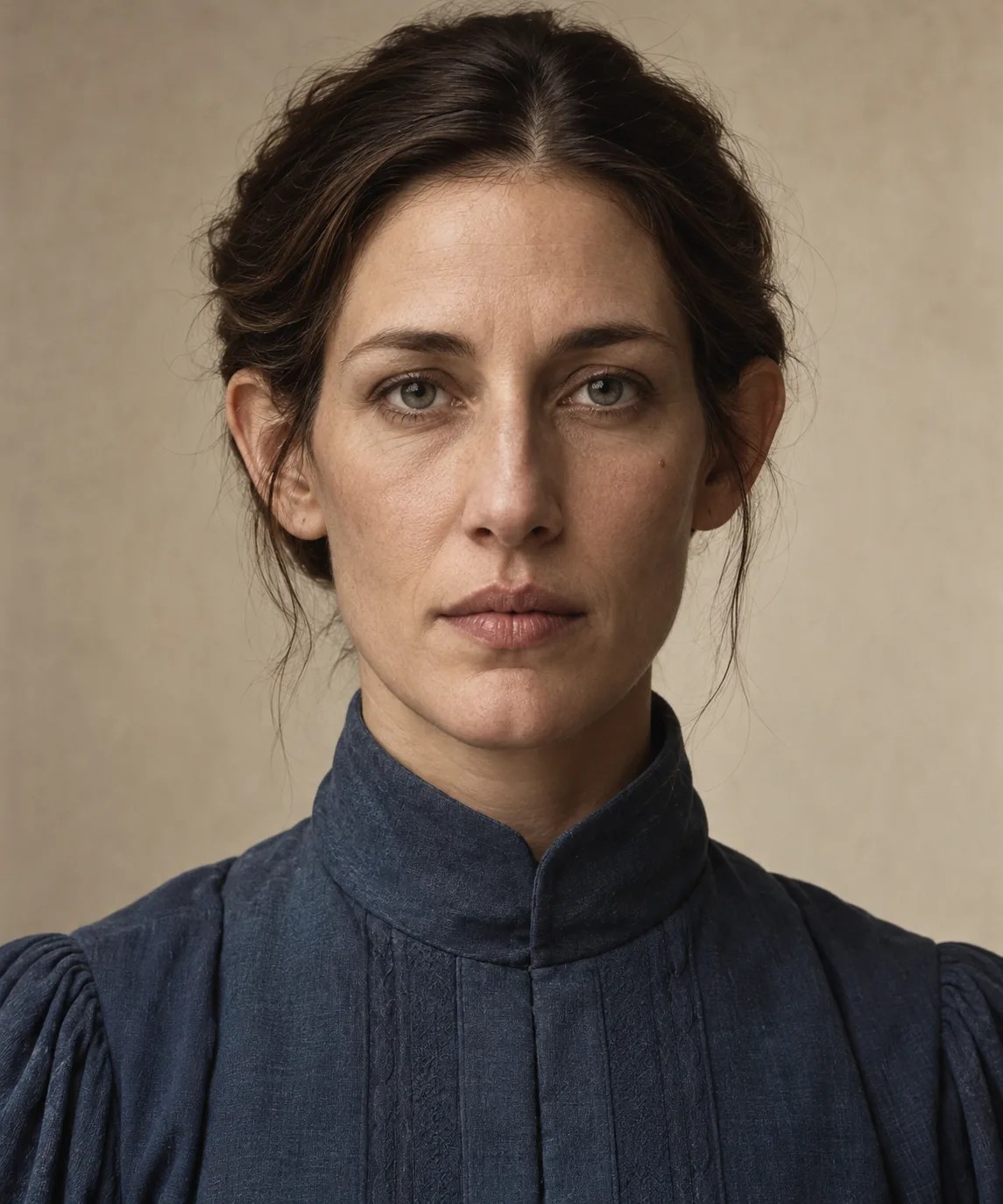
The technology that ended aging works by reminding cells what they are. Held lightly, it pauses the body at any chosen age with the adult mind intact. Taken all the way back to ten, it breaks autobiographical memory.
The break is incomplete. Language survives. So do learned skills, temperament, and the emotional weight of certain rooms and certain people. A reborn may forget her husband entirely and still feel safe beside him.
The church turns that incomplete biological break into an absolute legal one. The body half-remembers. The law says the person is dead.
The clay keeps the shape of the hand. It does not keep the hand.Taught to reborn children to explain feelings they cannot account for. Finalists read it as proof that nothing ends.



Read the plates right to left. The child is the newest.
The families change. The table doesn’t.



Every reborn is adopted, and the church decides where. In the ancient world, adoption authority kept family trees forking cleanly. Here it is how wealth moves and how justice is done. A tenant may name the family they want. Families may petition, and some bid. Every placement passes through the Office, and every party must be judged worthy.
Prison means nothing to someone who can wait forever. Placement does. Debt from a past life is made manifest in the next one, served out as a subservient child in a low household, and it ends at adulthood.
In a world where machines make anything instantly, low means doing things by hand. High families command the machines. Status is access, and the one thing automation can’t produce is being remembered. Notable vessels carry public histories of their past lives. Obscure ones carry a line or nothing, and erasure from the record is its own sentence.
The rule of recognition
Recognizing a former spouse in the street is no crime. Approaching her as that spouse is. The offense belongs to whoever remembers, though a reborn who pursues an attachment she can’t explain is liable too. Every widow, child and enemy of a prior tenant is a potential criminal.
Your own hand, already on the page.
- Tenant
- June Ostrander
- Ended
- Year 410
- Survived by
- One spouse, two children
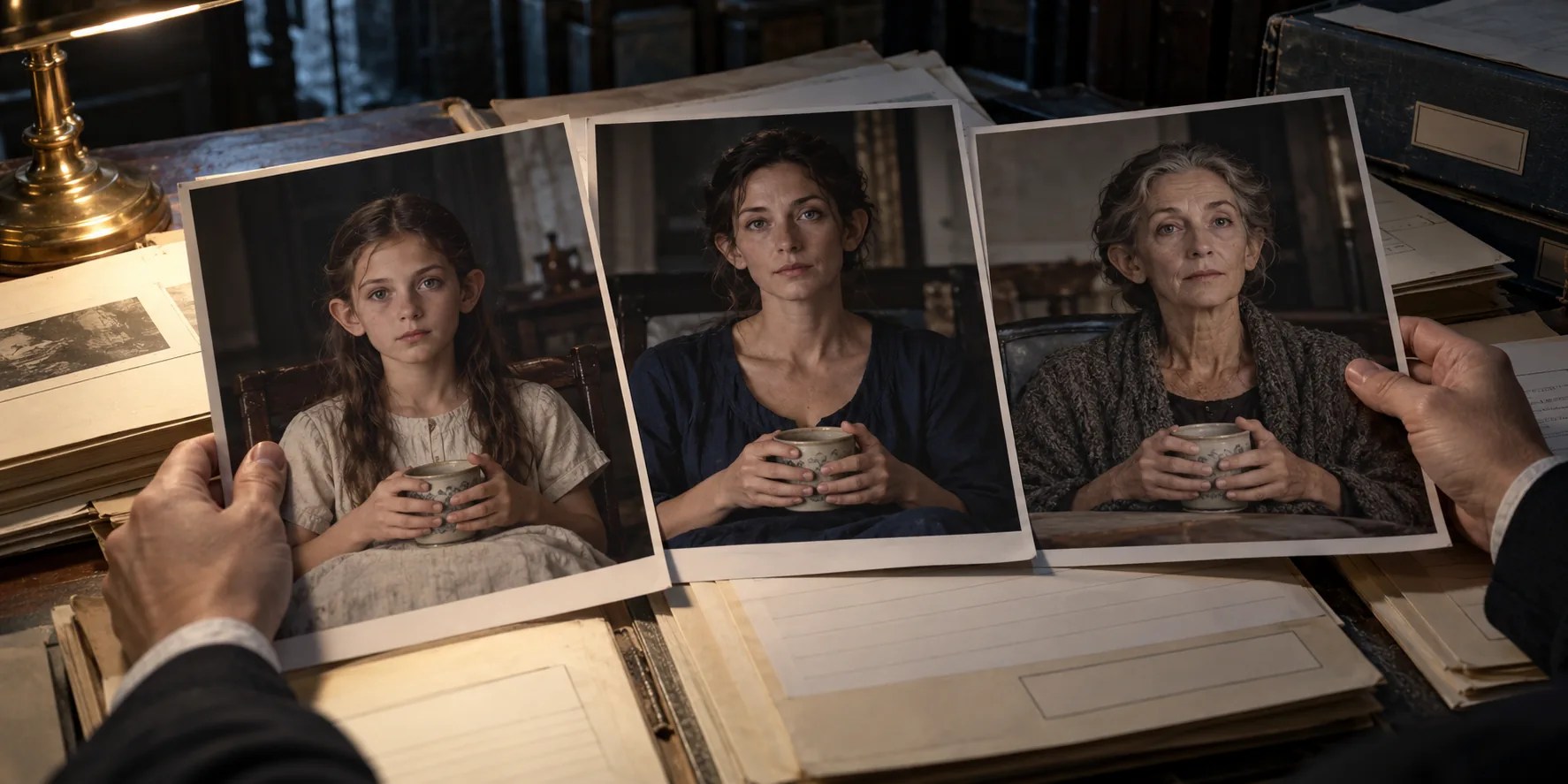
Three tenants. Three marriages ended within six years of the Shedding. Each kept the cup the same way. None was told about the others.
RestrictedA single body may have four or five death certificates on file. Each comes with its marriages, debts and obituaries. Reading your own vessel’s sealed record is the cardinal sin. The faith calls it self-necromancy and commands every tenant to treat the ones before as dead strangers.
People read them anyway. What they find is rarely a secret. It’s repetition. The same mistakes, the same loneliness, the same way of holding a cup. Memory didn’t carry it forward. Character did.
The Refusers
They want to keep themselves. They hold their bodies in pause, refuse the Shedding as murder of the ego, and cling to name, estate and memory. When caught, they are exiled to the mortal worlds.
The Finalists
They agree the self should end and believe the Shedding doesn’t end it. The archive is their proof. They want true death, and exile, the church’s punishment, is the one place they can reliably find it.
The child who is never new.

- From
- The reborn Teodor · age 10 · tenancy year 1
- To
- Magistrate Achterberg, Office of Placement
- Requested
- Household of Ostergaard
Place me with the Ostergaards. You’ll remember why. We settled it on the terrace at St. Abbo’s, the night the harbor froze, and you said you would owe me for it. Nobody else was there.
UnarchivedThe Shedding exists so no one can rule forever. The people who administer it have found a way to keep themselves. They submit to regression in public, on schedule, and wake with their minds intact. The ritual they perform for the congregation is the cover.
Loyal households raise them. Elders raise one another. Legal parents answer privately to their children, and those families guard the privileges that come with it. A ten-year-old with five centuries behind him is too composed, too informed and too patient. The church calls such children holy.
Skill survives regression, so handwriting proves nothing. Memory doesn’t survive. Teodor’s request cites a private conversation from his previous tenancy that was never recorded. The only other person who was there is Magistrate Achterberg, alive and unshed, who now holds evidence of the empire’s central lie. It arrived as an instruction, and he is expected to obey it.
They built a civilization in which no one could remain in power forever. Then they exempted themselves.
Working pitch
A mortal guide on a tourist world is sponsored into an immortal empire that keeps itself sane by ending every citizen’s identity every eighty years. Her search for why she was chosen leads to the people who never end their own.
Format
Ensemble dramatic series, developed alongside a prose foundation. The elevation provides the entry. Households, mortal worlds, church factions and successive tenancies carry the scope. Episode count and season architecture are open.
The opening question
Why did my sponsor choose me? The answer reaches past the sponsor into obligations, households and the Office itself.
Comparables
- Severance · identity divided by institution
- The Handmaid’s Tale · domestic life under theocracy
- Dune · faith as imperial machinery
- Zardoz · immortals who long for an ending

